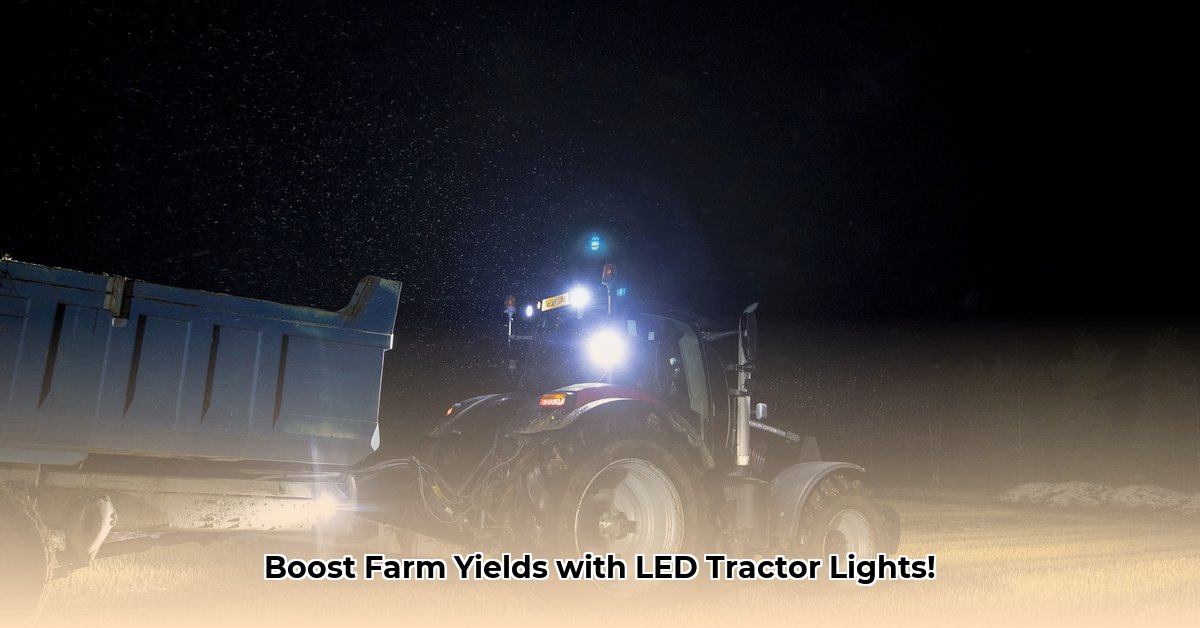
Farming demands long hours and unwavering dedication. But what if you could enhance safety, efficiency, and profitability with a simple upgrade? This guide explores how LED tractor lights can revolutionize your operations, leading to increased yields and a stronger bottom line. For more detailed information on LED tractor lights, check out this helpful resource. We'll walk you through choosing the right system, a step-by-step installation guide, long-term sustainability, and calculating your return on investment (ROI).
Why Upgrade to LED Tractor Lights?
Outdated lighting systems compromise safety and efficiency. Poor visibility at dawn, dusk, or night increases the risk of accidents and delays work. LEDs transform this, offering significantly improved illumination. But the benefits extend beyond just brighter lights.
Enhanced Safety: LEDs provide significantly brighter, clearer illumination, reducing the risk of accidents during low-light operations. Isn't safer nighttime operation worth the investment?
Increased Efficiency: LEDs use dramatically less energy than traditional halogen or HID lights. Studies show potential energy savings of up to 70%, translating directly to lower electricity bills and a healthier bottom line. With reduced energy costs, how much more could you accomplish?
Improved Productivity: Brighter, clearer lighting translates to longer working hours and more precise field work. This impacts your daily output and overall farm productivity. Does improved visibility mean more efficient work?
Choosing the Right LED Lighting System
Several reputable companies offer high-quality LED lighting systems tailored for tractors. Consider factors like ease of installation, warranty, lifespan, brightness (measured in lumens), and spectral distribution (color of light emitted). A direct comparison between prominent brands like TractorLights and Tiger Lights may highlight key differences.
| Feature | TractorLights | Tiger Lights | Considerations |
|---|---|---|---|
| Ease of Installation | Generally easy, potentially plug-and-play | Typically plug-and-play | Check installation guides; professional help may be beneficial. |
| Warranty | Varies by model; check specifications | Varies by model; check specifications | Warranty length and coverage are crucial factors. |
| Lifespan (Hours) | Varies by model; check specifications | Varies by model; check specifications | Longer lifespan translates to fewer replacements and lower costs. |
| Brightness (Lumens) | Varies by model; check specifications | Varies by model; check specifications | Higher lumens generally signify brighter illumination. |
| Spectral Distribution | Varies by model; check specifications | Varies by model; check specifications | Different spectral distributions impact visibility in varying conditions. |
Remember to thoroughly research specific models before purchasing. Read reviews and compare features to find the best fit for your tractor and budget.
Installing Your New LED Tractor Lights: A Step-by-Step Guide
Installing LED lights is generally straightforward, but safety is always paramount. Always follow the manufacturer's instructions.
Step 1: Safety First! Disconnect your tractor's battery before any electrical work to prevent shocks.
Step 2: Preparation. Gather the necessary tools (screwdrivers, wrenches, etc.) and carefully review the installation manual.
Step 3: Secure Mounting. Attach the lights securely to pre-designated mounting points, ensuring a firm fit.
Step 4: Wiring. Connect the lights to your tractor's electrical system, adhering to the wiring diagram. Consult a qualified electrician if unsure.
Step 5: Testing. Reconnect your battery and test the lights. Adjust as needed before resuming work.
Long-Term Sustainability and Environmental Impact
LEDs' extended lifespan significantly reduces waste compared to traditional bulbs, promoting sustainable farming practices. Explore responsible recycling options for end-of-life disposal. The ongoing development of more energy-efficient models further underscores the environmental benefits.
Calculating Your Return on Investment (ROI)
While the initial investment in LED lighting might seem substantial, the long-term savings are significant.
- Initial Costs: Calculate the total expenditure (lights, installation, disposal of old lights).
- Energy Savings: Compare your current energy consumption with projected LED usage (refer to your energy bills).
- Maintenance Savings: Factor in reduced maintenance due to LEDs' longer lifespan.
- Incentives: Check for local or national rebates or incentives for energy-efficient upgrades.
- Annual Savings: Calculate your total annual savings from reduced energy and maintenance costs.
- ROI: Divide your annual savings by your initial investment.
This calculation will help you quantify the financial benefits of upgrading to LED tractor lights.
Making the switch to LED tractor lights offers a compelling combination of enhanced safety, cost savings, and environmental responsibility. By carefully considering your specific needs and conducting thorough research, you can significantly improve your farm's efficiency, sustainability, and profitability.